 WanderAI
France · 3-day plan · Updated: 2026-11-20
Paris 3-Day Itinerary: Icons, Museums & Neighborhoods
3-day itinerary
Day 1: Eiffel Tower, Seine and the Champs-Élysées
- 9:00
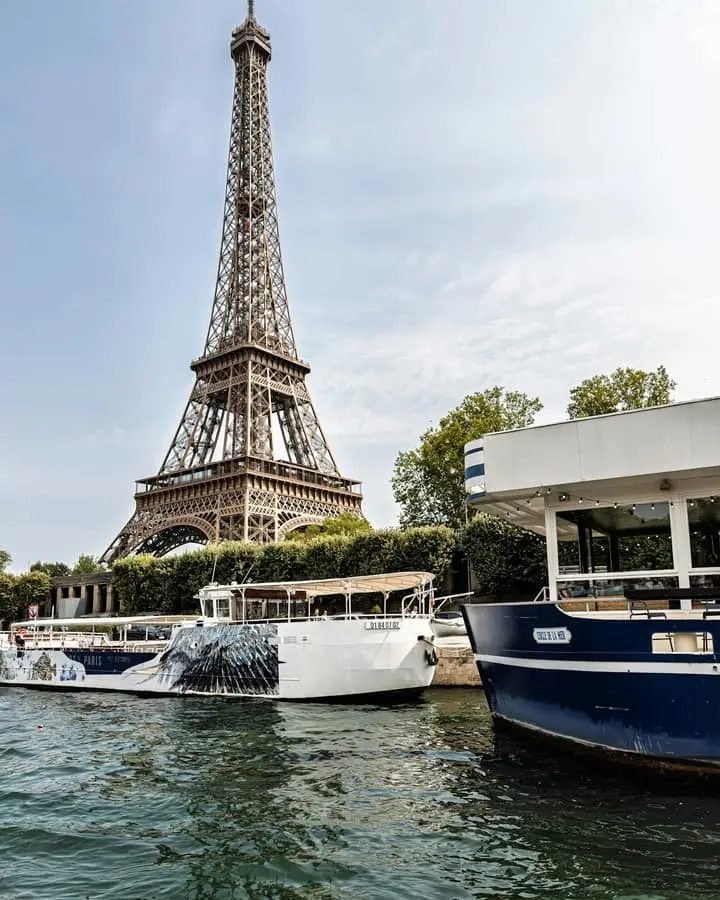
Trocadéro and the Eiffel Tower
Start at the Trocadéro esplanade for the classic view, then walk across the Pont d'Iéna to the Eiffel Tower. Book timed tickets online well ahead; climbing the stairs to the second floor is cheaper than the lift, and the summit costs more. Allow about 2 hours.
- 12:00
Lunch in the Rue Cler area
Walk about 15 minutes to the market street Rue Cler in the 7th arrondissement for a sandwich, cheese or a simple bistro lunch from nearby cafés and bakeries.
- 14:00
Musée d'Orsay
Housed in a former railway station, the museum has a major Impressionist and Post-Impressionist collection including Monet, Degas and Van Gogh. Allow 2-3 hours; it is usually closed on Mondays, so confirm opening days.
- 17:00
Walk through the Tuileries to Place de la Concorde
Cross the Seine on the Passerelle Léopold-Sédar-Senghor and stroll through the Tuileries Garden to Place de la Concorde, with its obelisk and views up the Champs-Élysées.
- 18:30
Champs-Élysées and Arc de Triomphe
Walk or take the Métro up to the Arc de Triomphe. The rooftop viewing platform gives a good view of the twelve avenues radiating out; tickets are cheaper than the Eiffel Tower and sunset is a popular time.
- 20:30
Dinner and optional Seine cruise
Eat in the 8th or 16th, or return toward the river for a one-hour boat cruise that departs near the Eiffel Tower to see the monuments lit up at night.
Day 2: The Louvre, Île de la Cité and the Marais
- 9:00
Louvre Museum
Arrive at opening with a pre-booked timed ticket. Pick a few priorities such as the Mona Lisa, Winged Victory and the Egyptian antiquities rather than trying to see everything. Plan 3 hours; it is usually closed on Tuesdays.
- 12:30
Lunch near Palais-Royal
Walk through the Palais-Royal gardens and arcades and have lunch at a nearby bistro or in Passage Véro-Dodat or Galerie Vivienne, two of the covered passages.
- 14:30
Sainte-Chapelle and the Conciergerie
On Île de la Cité, Sainte-Chapelle's upper chapel has remarkable 13th-century stained glass. Tickets are timed, and a combined ticket with the Conciergerie is often available.
- 16:00
Notre-Dame exterior and Île Saint-Louis
Notre-Dame reopened after the 2019 fire; check current visiting arrangements, as entry is generally free but queues vary. Then cross to quiet Île Saint-Louis for a stroll and ice cream.
- 17:30
Le Marais
Wander the medieval streets of the Marais, visit Place des Vosges, browse boutiques on Rue des Francs-Bourgeois and try falafel on Rue des Rosiers.
- 20:00
Dinner in the Marais
Choose a bistro or wine bar around Rue de Bretagne or Rue Vieille du Temple. Reserve ahead on weekends.
Day 3: Montmartre, Latin Quarter and Saint-Germain
- 9:00
Sacré-Cœur and Montmartre
Go early to avoid crowds at the basilica and its hilltop view. Walk through Place du Tertre, Rue de l'Abreuvoir and past the Wall of Love. Expect steep streets and stairs, and keep an eye on your belongings.
- 11:30
Café stop and market streets
Have a coffee and croissant in a local café, or shop for picnic food on Rue Lepic before heading south by Métro.
- 13:30
Panthéon and Luxembourg Gardens
In the Latin Quarter, see the Panthéon from the outside or inside, then walk to the Luxembourg Gardens to sit by the fountain, as many Parisians do.
- 15:30
Shakespeare and Company and Saint-Germain-des-Prés
Browse the famous English-language bookshop near the Seine, then walk through Saint-Germain-des-Prés, passing historic cafés such as Café de Flore and Les Deux Magots.
- 17:30
Pont des Arts and riverside walk
Stroll the quais, looking at the bouquinistes' green book stalls, and cross the Pont des Arts for views of the Île de la Cité.
- 19:30
Farewell dinner
Book a traditional bistro in Saint-Germain or the Latin Quarter. Order a set menu (formule) where available to keep costs manageable.
Paris is a compact, walkable city of about 2 million people, divided into 20 arrondissements that spiral outward from the Seine. Its character comes from the mix of grand 19th-century boulevards, small neighborhood cafés, world-class museums and a daily rhythm built around bakeries, markets and long meals. It rewards slow wandering as much as ticking off landmarks.
This guide fits the essentials into three days without rushing every hour. Day 1 covers the western icons and the Seine, Day 2 pairs the Louvre with the historic center and the Marais, and Day 3 goes up to Montmartre and finishes in the Latin Quarter and Saint-Germain. Each day groups places that are close together so you spend less time on the Métro.
Below you will also find the best months to visit, how to get in from the airports, rough daily budgets, neighborhoods to stay in, dishes worth trying, and practical tips. Prices and rules are approximate and change often, so check official websites before you book.
When to go
April to June and September to early October are generally the best balance: mild temperatures (often 12-24°C / 54-75°F), long daylight and lively terraces. Expect crowds at major sights, especially around Easter and in June. July and August can be hot, and some smaller local businesses close for part of August, though the city stays busy with tourists. November to March is cooler and grayer (often 2-10°C / 36-50°F) with shorter days, but museums are quieter and hotel prices are usually lower, except around Christmas and New Year.
Getting around
From Charles de Gaulle (CDG), the RER B train reaches central stations such as Gare du Nord, Châtelet-Les Halles and Saint-Michel in roughly 35-50 minutes for around €11-14. Taxis from CDG use a flat fare of roughly €56-65 depending on which bank of the Seine you go to; traffic can make the trip longer. From Orly (ORY), the Métro line 14 now connects directly to the center in about 25-30 minutes, and the tram T7 links to line 7. Within the city, the Métro, buses, RER and trams share the same fare zones. Contactless payment and the Navigo Easy card (small card fee, load single tickets or carnets) are the simplest options; a single ticket costs roughly €2.50 for most journeys. The Navigo Découverte weekly pass is a good value only if you arrive near the start of a Monday-to-Sunday week. A Paris Visite pass exists but often costs more than paying per ride. Many central sights are within 20-30 minutes' walk of each other, and Vélib' bikes are available for short hops.
Where to stay
Le Marais (3rd/4th)
Central, walkable and lively, with boutiques, restaurants and historic streets. Good for first-time visitors and couples, though rooms can be small and pricey.
Saint-Germain-des-Prés / Latin Quarter (5th/6th)
Classic Left Bank atmosphere near Notre-Dame, bookshops and the Luxembourg Gardens. Suits culture-focused travelers who prefer a quieter evening scene.
Montmartre / 9th arrondissement
Village-like feel with a hilltop view and more moderate prices near Pigalle and Rue des Martyrs. Suits budget-minded travelers; the hill is steep and some streets are busy at night.
7th arrondissement
Elegant and calm, close to the Eiffel Tower and Musée d'Orsay. Suits families and those who want a quiet base, with fewer nightlife options.
What to eat
Croissant and pain au chocolat
Best from a neighborhood boulangerie in the morning. Look for butter (pur beurre) on the label.
Baguette sandwich (jambon-beurre)
Simple ham and butter on a fresh baguette, a cheap and filling lunch.
Steak frites
A bistro staple of grilled steak with fries, usually ordered with a pepper or shallot sauce.
Onion soup (soupe à l'oignon)
A rich soup topped with melted cheese and bread, best in cooler months.
Cheese course
Try Brie de Meaux, Comté, Camembert or goat cheeses from a fromagerie or a restaurant cheese plate.
Crêpes and galettes
Sweet crêpes and savory buckwheat galettes are widely available, with Montparnasse known for Breton crêperies.
Practical tips
- Book timed tickets online for the Eiffel Tower, Louvre, Sainte-Chapelle and Orsay, as slots can sell out days ahead.
- Cards and contactless payments are widely accepted; carry a little cash for small cafés and public toilets.
- Service is included in restaurant prices by law, so tipping is optional; rounding up or leaving a few euros for good service is common.
- Pickpocketing is common around major sights and on crowded Métro lines, so use a zipped bag and keep phones out of back pockets.
- Say 'Bonjour' when entering shops and restaurants; a greeting goes a long way, even if you continue in English.
- Many museums close one day a week (the Louvre usually Tuesday, Orsay usually Monday), so plan around closures.
- Ask for 'une carafe d'eau' for free tap water at restaurants and refill bottles at public Wallace fountains.
- Wear comfortable shoes, as you will likely walk 15,000 steps or more a day on cobbles and stairs.
Daily budget per person (USD)
FAQ
Is 3 days enough for Paris?
Three days is enough to see the main highlights at a steady pace, including one or two big museums. You will not see everything, so choose priorities and leave some free time for wandering.
How much does a trip to Paris cost per day?
Roughly $110 per day on a tight budget with hostels and casual meals, $260 for mid-range hotels and restaurants, and $600 or more for luxury stays. Accommodation is usually the biggest variable.
Do I need to book the Eiffel Tower and Louvre in advance?
Yes, it is strongly recommended. Both use timed entry, and walk-up tickets can be limited or involve long queues, particularly in peak season.
Is the Paris Museum Pass worth it?
It can be if you plan to visit three or more included museums in the pass period, since it covers many sights including the Louvre and Orsay. You may still need to reserve a time slot, so check current rules.
Is Paris safe for tourists?
Paris is generally safe for visitors, but petty theft and scams are common in crowded areas and on public transport. Stay alert, secure your valuables and be cautious late at night in quieter areas.
Prices and rules are approximate; check current information before you travel.