 WanderAI
Netherlands · 3-day plan · Updated: 2026-11-20
Amsterdam 3-Day Itinerary: Canals, Art & Local Life
3-day itinerary
Day 1: Historic Center and Western Canals
- 9:00 AM
Dam Square and the Royal Palace area
Start at Dam Square, the historic heart of the city. Look at the Royal Palace and the Nieuwe Kerk from outside, then take a short walk through the Nieuwendijk and Spui area to get your bearings before the crowds build.
- 10:30 AM
Begijnhof and Spui
Step through the doorway into the Begijnhof, a quiet courtyard of medieval almshouses. Keep your voice down, as people still live here. Nearby Spui has bookshops and a book market on Fridays and an art market on Sundays.
- 12:30 PM
Lunch at Foodhallen or Café de Prins
Walk west toward the canals for lunch. Café de Prins on Prinsengracht is a classic brown cafe with sandwiches and soups. Foodhallen, a bit farther, offers many small stalls if your group wants variety.
- 2:00 PM
Anne Frank House
Visit the Secret Annex where Anne Frank and her family hid during World War II. Tickets are timed, released online in advance, and often sell out weeks ahead, so book early. Allow about an hour.
- 4:00 PM
Jordaan wandering and Westerkerk
Walk into the Jordaan, with its small streets, galleries and independent shops. Stroll along Bloemgracht and Egelantiersgracht, and stop for coffee or apple pie at Winkel 43 on Noordermarkt.
- 7:00 PM
Dinner and evening canal cruise
Eat in the Jordaan, then take an evening canal cruise from the Prinsengracht area. The canals are lit after dark and the cruises are a relaxed way to see the ring, typically lasting about an hour.
Day 2: Museum Quarter and Green Spaces
- 9:00 AM
Rijksmuseum
Arrive at opening with a pre-booked ticket. Head first to the Gallery of Honour for Rembrandt's The Night Watch and Vermeer's works, then explore the Dutch history and decorative arts rooms. Plan about 2.5-3 hours.
- 12:00 PM
Museumplein and lunch
Walk across Museumplein, the large public lawn, and stop for the photo spot by the letters if they are in place. Lunch nearby on Van Baerlestraat or at one of the cafes on the square.
- 1:30 PM
Van Gogh Museum
See the world's largest collection of Van Gogh's paintings and letters, arranged chronologically. Timed tickets are required and sell out in busy seasons. Allow about 1.5-2 hours.
- 4:00 PM
Vondelpark
Unwind in Amsterdam's best-known city park. Stroll the paths, watch the locals and, in good weather, take a drink at one of the park cafes such as Vondeltuin or Het Blauwe Theehuis.
- 6:30 PM
Leidseplein dinner
Walk to the Leidseplein area for dinner. The side streets offer a range of options, from Indonesian rijsttafel to Dutch bistros. Book ahead on weekends.
Day 3: De Pijp, the East and Amsterdam Noord
- 9:30 AM
Albert Cuyp Market
Browse this long street market in De Pijp, open six days a week (closed Sundays). Try a fresh stroopwafel and a herring sandwich if you are curious.
- 11:30 AM
Heineken Experience or Sarphatipark
If you like brewery tours, the Heineken Experience is nearby, but it is touristy and priced accordingly. For a calmer option, stroll Sarphatipark and the cafes along Frans Halsstraat.
- 1:00 PM
Lunch and Hortus Botanicus
Head toward the Plantage district. Visit the Hortus Botanicus, one of the oldest botanical gardens in the world, with greenhouses and a butterfly house. It is a quiet counterpoint to the busier center.
- 3:30 PM
NEMO rooftop and the free ferry
Walk to the harbour area and climb up to NEMO's free public terrace for views. Then take the free GVB ferry from behind Centraal Station to Amsterdam Noord.
- 5:00 PM
A'DAM Lookout or NDSM Wharf
Visit the A'DAM Lookout for rooftop views, or take the longer ferry to NDSM Wharf, a former shipyard with street art, converted warehouses and relaxed cafes such as Pllek.
- 7:30 PM
Farewell dinner at Foodhallen or Noord
Eat in Noord, or take the ferry back for a final meal in the center. A Dutch dinner of stamppot or fresh fish is a good way to end the trip.
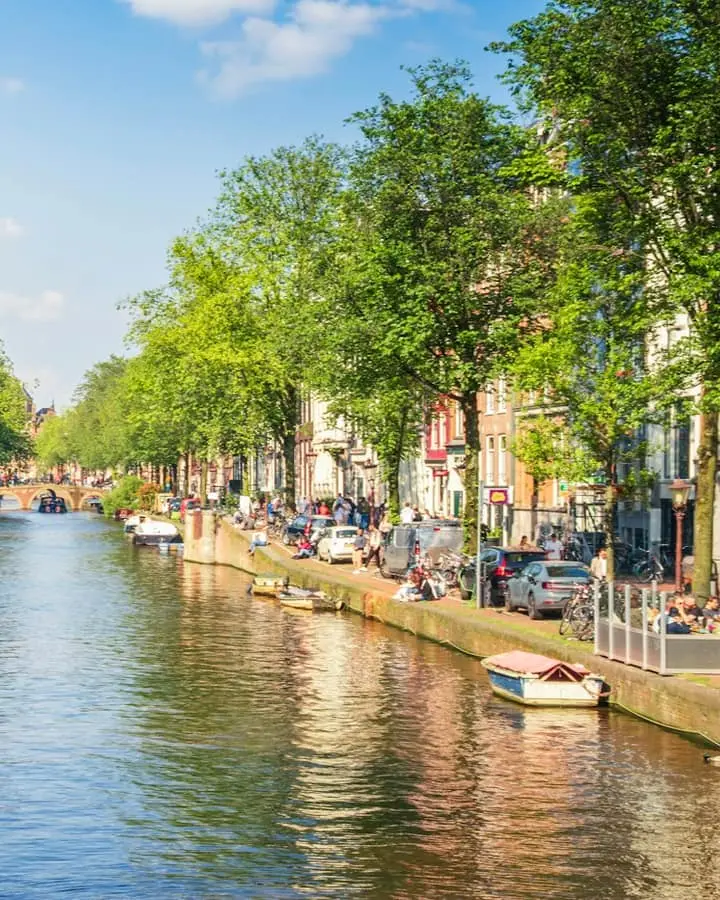
Amsterdam is compact, walkable and built around its 17th-century canal ring, a UNESCO-listed network of waterways, narrow brick houses and humpbacked bridges. It is a city of bicycles, brown cafes, world-class museums and quiet courtyards, and it rewards slow wandering as much as ticketed sights.
This guide fits the main highlights into three days without rushing. Day one covers the historic center and the western canals, day two focuses on art and green space around Museumplein, and day three explores the east and the creative north side of the IJ, plus the markets and food of De Pijp.
Prices and opening rules here are approximate and change often, so check official sites before you go. Museums such as the Anne Frank House and Rijksmuseum use timed tickets that can sell out, so booking ahead is worth doing as soon as your dates are set.
When to go
April to early May is lovely for tulips (Keukenhof is open roughly late March to mid-May), mild weather and long days, though Easter and King's Day (27 April) are very crowded. June to August is warm, usually 18-24°C, with the longest daylight but the biggest crowds and highest hotel prices. September is often a good balance of mild weather and fewer visitors. November to March is cold, damp and grey, around 0-8°C, but prices drop and museums are quieter. Rain can occur in any month, so pack a light waterproof.
Getting around
From Schiphol Airport, trains run to Amsterdam Centraal in about 15-20 minutes for roughly 5-6 euros one way; buy at machines or tap a contactless card or phone at the gates. Buses and taxis are available but slower or pricier. In the city, the center is very walkable. Trams, buses, metros and some ferries are run by GVB; you can tap in and out with a contactless bank card, or buy an OV-chipkaart or a GVB day ticket (about 9-10 euros for 24 hours, with longer options available). The I amsterdam City Card bundles transit with some museums and a canal cruise, but it only pays off if you visit many paid sights. Cycling is popular, but traffic is busy and bike lanes have their own rules, so rent only if you are confident. Free ferries behind Centraal Station cross to Amsterdam Noord.
Where to stay
Jordaan and Western Canals
Picturesque, quiet at night and central, with plenty of cafes and boutiques. It suits first-time visitors and couples, though hotel prices are higher and rooms can be small.
De Pijp
A lively, multicultural area with the Albert Cuyp Market and many restaurants and bars. It suits food lovers and travelers who want a local feel with good tram connections.
Museumkwartier and Vondelpark
Leafy and elegant, close to the Rijksmuseum, Van Gogh Museum and park. It suits families, culture-focused travelers and those who prefer quiet evenings.
Amsterdam Noord
Reached by free ferry, it has creative spaces, design hotels and more affordable rates. It suits younger travelers and repeat visitors who do not mind a short ferry commute.
What to eat
Stroopwafel
Two thin waffles sandwiched with caramel syrup. They are best warm from a market stall, such as on Albert Cuyp.
Haring (herring)
Raw, lightly cured herring served with chopped onions and pickles from street stands. Locals often eat it in the early summer season when it is considered best.
Bitterballen
Crispy fried balls filled with a thick beef ragout, typically served with mustard alongside a beer at a brown cafe.
Stamppot
A hearty winter dish of mashed potatoes with kale or sauerkraut, usually served with smoked sausage.
Indonesian rijsttafel
A legacy of Dutch colonial history, this is a spread of many small dishes served with rice. It is best shared by a group.
Dutch cheese and Jenever
Taste aged Gouda at a cheese shop and try jenever, a juniper-flavored spirit and ancestor of gin, at a traditional tasting house like Proeflokaal Wynand Fockink.
Practical tips
- Many places accept cards, and some businesses are card-only, so carry only a small amount of cash for markets and small stalls.
- Tipping is modest. Rounding up or leaving about 5-10 percent for good table service is common, and not required.
- Watch for bicycles. Look both ways before crossing bike lanes, which are often red-colored and sit next to sidewalks.
- Pickpocketing is common near Centraal Station, in crowded trams and in the busiest tourist areas, so keep valuables in front of you.
- Book the Anne Frank House, Rijksmuseum and Van Gogh Museum as early as you can, since timed slots can run out weeks in advance during busy periods.
- Cannabis is sold in licensed coffeeshops, but smoking in public spaces in some areas is restricted, and rules in the Red Light District have been tightening. Check current local rules.
- Photography of workers in the Red Light District is not allowed, and guided group behavior there is increasingly restricted. Be respectful.
- Tap water is safe to drink, so bring a refillable bottle.
Daily budget per person (USD)
FAQ
Is 3 days enough for Amsterdam?
Yes, three days is enough to see the main sights, take in a few museums and enjoy the canals at a comfortable pace. A fourth day would allow a day trip to places such as Haarlem, Utrecht or the tulip fields.
How much does Amsterdam cost per day?
Roughly 110 USD per day on a budget with hostels and casual meals, around 250 USD for mid-range hotels and restaurants, and 550 USD or more for luxury stays. Accommodation is the biggest variable and prices rise in peak season.
Do I need to book the Anne Frank House in advance?
Yes. Tickets are sold online for specific time slots, and they often sell out well ahead. Check the official website for when new tickets are released, and avoid unofficial resellers.
Is the I amsterdam City Card worth it?
It depends. It can offer value if you plan several paid attractions plus a canal cruise and heavy transit use, but many major museums still need separate timed bookings. Add up the actual costs of your plan before buying.
Is Amsterdam safe for tourists?
Generally yes. The main concerns are petty theft such as pickpocketing, and bike traffic. Take normal precautions in crowded areas and at night around the center.
Prices and rules are approximate; check current information before you travel.