 WanderAI
Georgia · 3-day plan · Updated: 2026-11-20
Tbilisi 3-Day Itinerary: Old Town, Baths & Wine
3-day itinerary
Day 1: Old Tbilisi, Baths and Fortress Views
- 9:00
Breakfast at Meidan Bazaar area
Start near Meidan Square with coffee and khachapuri or bread from a local bakery. The area is the heart of Old Tbilisi and a good base for the morning.
- 10:00
Metekhi Church and Abanotubani
Walk to Metekhi Church for river views, then to Abanotubani, the domed sulfur bathhouse district. See the brick domes and Gabriadze-style quirks nearby; book a private bath at Orbeliani or Chreli Abano for later if you want one.
- 12:30
Lunch with a view or in Sioni
Try khinkali and a salad at a traditional restaurant around Sioni Street or Kote Abkhazi Street. Order khinkali by count and eat them by hand, leaving the top knob.
- 14:00
Narikala Fortress and Mother of Georgia
Ride the Rike Park cable car up toward Narikala, or walk up from Abanotubani. Explore the ruins, then follow the ridge path to the Kartlis Deda statue for city panoramas. Allow about two hours.
- 17:00
Bridge of Peace and Rike Park
Descend and cross the Bridge of Peace in Rike Park, then stroll the riverside as the light softens. Look across to the Presidential Palace and the Rike Park concert hall.
- 19:30
Dinner on Shavteli or Erekle II Street
Eat Georgian dishes such as mushrooms in ketsi, ojakhuri and badrijani nigvzit, with a glass of qvevri wine.
Day 2: Sololaki, Rustaveli and Mtatsminda
- 9:30
Sololaki courtyards and Kala
Wander Sololaki's fading courtyards and ornate staircases, with a coffee stop at a local cafe. Stay respectful; these are people's homes.
- 11:00
Georgian National Museum
Visit the Simon Janashia Museum on Rustaveli Avenue to see the Soviet Occupation gallery and archaeological treasures including the Dmanisi finds and Colchian gold. Allow 1.5-2 hours.
- 13:00
Lunch near Rustaveli
Have lunch at a cafe around Rustaveli or Marjanishvili, trying lobiani, pkhali and a bowl of kharcho.
- 14:30
Dry Bridge Market
Browse Soviet memorabilia, art, ceramics and vintage items near Dry Bridge. Bargain politely and treat claims of antiquity with some skepticism.
- 16:30
Funicular to Mtatsminda Park
Take the funicular up Mtatsminda for views over the city. The park has an amusement area, a Pantheon of notable Georgians nearby and cafes. Check that the funicular is running before you go.
- 19:30
Dinner and wine in Vera or Chugureti
Finish in a neighborhood restaurant or wine bar to try natural qvevri wines and a few small plates.
Day 3: Mtskheta Day Trip and Wine Evening
- 9:00
Travel to Mtskheta
Take a marshrutka from Didube station or a taxi for about 25 minutes. Mtskheta is a UNESCO World Heritage town and Georgia's historic religious center.
- 10:00
Svetitskhoveli Cathedral
Visit this 11th-century cathedral, the symbolic heart of Georgian Christianity. Cover shoulders and knees; women may be expected to cover their heads in some churches.
- 11:30
Jvari Monastery
Go by taxi or a short drive to Jvari, a 6th-century church on a hill above the meeting of two rivers. Views are the main reward.
- 13:30
Lunch in Mtskheta
Eat at a restaurant on Svetitskhoveli's side streets, trying grilled meats, shotis puri bread and local cheese.
- 16:00
Return to Tbilisi and Fabrika
Return to the city and walk around Fabrika, a Soviet-era sewing factory turned hostel, cafe and creative space.
- 19:00
Wine tasting dinner
End with a tasting at a wine bar in Sololaki or Vera, sampling amber wines like Rkatsiteli and reds like Saperavi.
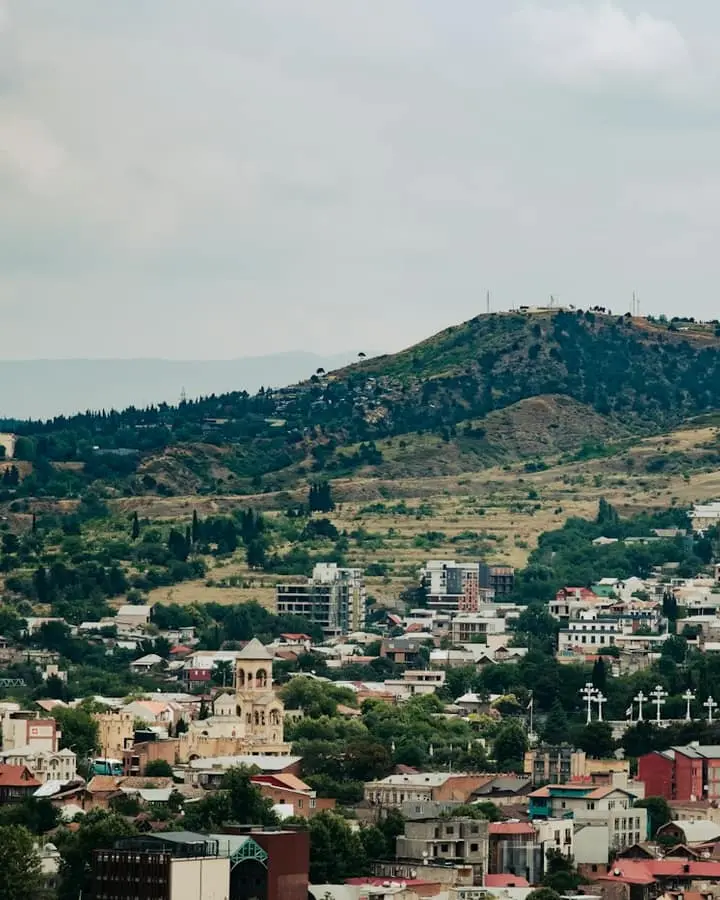
Tbilisi sits in a river valley where Persian, Ottoman, Russian and Soviet layers show up within a few blocks. Wooden balconies lean over the Mtkvari River, Orthodox churches stand beside brutalist buildings, and hillside fortresses look down on the old sulfur bathhouses. The city is hilly, informal and walkable in the center, with a strong cafe, wine and supra (feast) culture.
This guide fits the main sights into three days without rushing. Day one covers Old Tbilisi, Abanotubani and Narikala. Day two moves through Sololaki, Rustaveli Avenue, the Dry Bridge market and Mtatsminda. Day three goes beyond the center to Mtskheta, one of Georgia's oldest towns, and ends back in the city with a wine-focused evening.
Prices and opening hours here are approximate and change often, so check current details before you go. Wear comfortable shoes, since cobbles and slopes are common, and expect to eat well at modest prices.
When to go
May to June and September to October are the most comfortable: typically warm days (roughly 18-28°C), good light and harvest season in autumn. July and August can be hot, often above 33°C, though evenings are lively and Black Sea and mountain escapes are nearby. Winter is cold and sometimes damp or snowy, but crowds are thin and prices are lower. Spring brings some rain. Major holidays such as Easter and New Year bring local crowds and some closures.
Getting around
Tbilisi International Airport (TBS) is about 15-20 km from the center. Taxis via apps like Bolt or Yandex Go usually take 25-40 minutes and cost roughly 15-25 GEL; agree a price or use the app. Bus 337 runs between the airport and Station Square (Tbilisi Central Railway Station) for a very low fare, around 1 GEL, and you can pay with a Metromoney card. Within the city, buy a rechargeable Metromoney card (small refundable or fixed card fee, then top up) and use it on the metro, city buses and the cable cars, with transfers typically discounted within a time window. The metro is limited to two lines, so buses and ride-hailing fill the gaps. Bolt and Yandex Go are cheap and widely used. The center around Old Town, Sololaki and Rustaveli is walkable. For Mtskheta, use a marshrutka from Didube station or a taxi.
Where to stay
Old Tbilisi (Sololaki and Abanotubani)
Best for first-time visitors who want to walk to the main sights, restaurants and baths. Expect noise on weekends and some steep streets.
Vera and Mtatsminda foothills
Quieter and residential, with good cafes and parks. Suits couples and travelers who like a calmer base within walking distance of the center.
Rustaveli and Marjanishvili
Central, with theaters, museums and metro access. Good for culture-minded travelers and those who want easy transport.
Chugureti and Fabrika area
Younger, creative and budget-friendly with bars, hostels and design shops. Suits solo travelers and nightlife seekers.
What to eat
Khinkali
Large soup-filled dumplings, usually with spiced meat. Hold by the top, bite and sip the broth first.
Khachapuri
Cheese bread in several regional styles; Adjarian is boat-shaped with egg and butter, Imeruli is round and flat.
Badrijani nigvzit
Fried eggplant rolls filled with walnut paste, garlic and herbs, often with pomegranate seeds.
Pkhali
Chopped, seasoned vegetables such as spinach or beet mixed with walnut paste.
Mtsvadi and ojakhuri
Grilled pork or beef skewers and a pan-fried meat and potato dish, both common on supra tables.
Qvevri wine and chacha
Wine made in buried clay vessels, including amber styles, plus chacha, a strong grape spirit often served after meals.
Practical tips
- Cash in Georgian lari (GEL) helps in small shops and marshrutkas, but cards are widely accepted in restaurants and shops. ATMs are plentiful.
- Tipping of about 10% is common in restaurants; check whether service is already added to the bill.
- Tbilisi is generally safe, but watch for pickpockets in crowded areas and use ride-hailing apps rather than unmarked taxis to avoid overcharging.
- Book popular restaurants and sulfur baths ahead on weekends and in peak season.
- Dress modestly for churches: covered shoulders and knees, and headscarves for women in some places.
- Pavements can be uneven and steep, so wear comfortable shoes with grip, especially in rain.
- Stray dogs are common and are usually calm; do not feed or approach them if they seem unsettled.
- Tap water is generally drinkable in Tbilisi, but many visitors prefer bottled water if sensitive. Carry a small amount of cash for toilets in some places.
Daily budget per person (USD)
FAQ
Is 3 days enough for Tbilisi?
Three days is enough to cover the main sights, food and a half-day trip such as Mtskheta. Add more days if you want Kakheti wine country or the Caucasus mountains.
Do I need a visa for Georgia?
Many nationalities, including the US, EU, UK and others, can enter visa-free for up to about a year, but rules change. Check current requirements with official sources before travel.
Is Tbilisi expensive?
Compared with Western Europe, it is inexpensive. Meals, transport and local wine are cheap, while upscale hotels and tours cost more.
How do I get from Tbilisi airport to the city?
Use a Bolt or Yandex Go taxi (roughly 15-25 GEL) or bus 337 to Station Square. Both take around 30-45 minutes depending on traffic.
Is it worth visiting the sulfur baths?
Yes, for a traditional experience. Book a private room in Abanotubani and expect a mild sulfur smell. Prices vary by bathhouse and room size.
Prices and rules are approximate; check current information before you travel.